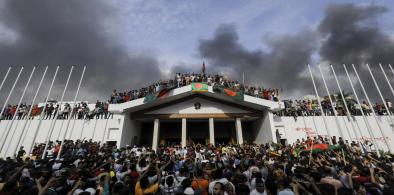
Bangladeshi citizens protest government in July 2024. Screenshot from ABC News Australia report.

Will A Rightwing Victory Transform Bangladesh? Jamaat's Rise Raises Uncomfortable Questions

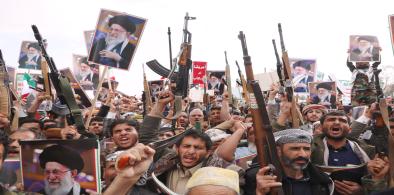
If Jamaat comes to power it will likely begin with populist moves such as anti-corruption drives, predicts Ahmedur Chowdhury, a Bangladeshi writer and editor who has been living in Norway since surviving a 2015 attack. He says he fears  mobilisation of religious groups to push for declaring Bangladesh an Islamic republic and enforce Sharia law. The result would be shrinking freedoms for women, curbs on cultural life, and serious threats to freedom of expression, religious minorities, and secular political and cultural spaces.

Pakistan Mosque Blast: ISIS' Growing Shadow In The Subcontinent

The threat from ISIS-K is real and growing. A resurgence in Pakistan would have serious implications for the broader region, including India. The danger is compounded if Pakistan once again attempts to clandestinely redirect ISIS-K towards Kashmir. What may appear as an isolated terror incident is, in fact, part of a wider pattern that demands sustained vigilance. Pakistan’s internal security instability risks creating openings for cross-border terror movements, potentially hardening new militant modules aimed at India and beyond.

After the Begums: Battle For The Soul Of Bangladesh Has Just Begun

The optimistic view is that the “Twin Election” will force a compromise. The referendum provides a mandate for reform that even a BNP government cannot ignore. The “July Charter”, if ratified, creates checks on executive power that did not exist before. The students, even if they end up on the opposition benches, will form a moral pressure group that cannot be easily crushed. The cynical view is that Bangladesh is merely swapping a monopoly for a duopoly, or worse, a monopoly of a different colour.

Bangladesh Heads to Crucial Elections Amid Political Exclusion: A Divided Nation Needs Democratic Renewal

All signs point to a BNP victory. In a competitive contest without the Awami League, the BNP’s organisational depth and electoral reach make it the frontrunner. Yet victory alone may not translate into authority. The absence of the Awami League, the continued influence of Sheikh Hasina from exile, the rise of Islamist alternatives, and the central role of unelected institutions mean that any new government will inherit a fractured polity. The 2026 election may revive the BNP’s fortunes, but it will not by itself heal Bangladesh’s democratic wounds.

More on Spotlight

When Pakistan's Nuclear Blackmail Becomes A Currency: U.S. Silence and Strategic Choices for India

India is a responsible nuclear power, the world’s fastest-growing major economy, and a civilisation-state that does not live on borrowed credibility. It has the patience to navigate provocation and the capacity to respond decisively. If Pakistan’s military flirts with Armageddon, India will respond “BrahMostically” with unmatched precision and power.

The Asian Century by 2050: Three Possible Scenarios for Regional Power and Global Leadership

Whether dominated by China's singular might, led by India's democratic coalition, or governed through shared stewardship, the path Asia takes by 2050 will profoundly influence the global balance of power, ethical governance, and economic prosperity. India's role, whether as counterweight or partner to China, will be critical.

Assam's Demographic Dilemma: Will Politics of Population Divide or Unite Northeast India's Most Populous State?

A seminal 2020 study by Das and Talukdar outlines the socio-economic and political consequences of this migration. The authors note that the influx, particularly post-1971, has led to widespread fear among Assamese communities about becoming minorities in their own homeland. Migration has altered landholding patterns, changed linguistic profiles, and generated social unrest. 

Nepal Negotiating A Difficult Equilibrium Between China And India

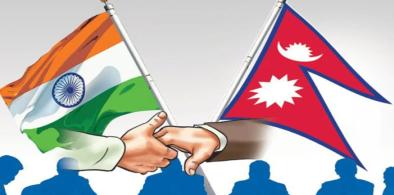
With the steady return of Chinese tourists as well as expanding trade, China’s growing commercial footprint in Nepal is forcing Kathmandu to search for balance and sustainability in its economic engagement with China. It will also perhaps move India to compete more selectively to secure its commercial presence in the face of a resurgent Chinese involvement. 

A Reconfigured Geoeconomic Landscape Presents India With A Strategic Opportunity

India should reiterate its strategic autonomy publicly while making clear that it views strong ties with the US as vital. India insists its oil purchases from Russia are driven by economic necessity, not geopolitics, while questioning US-EU hypocrisy on Russia sanctions. Counter Trump's alignment with Pakistan and inflammatory rhetoric by highlighting India’s reliability as a global partner and democratic ally in the Indo‑Pacific.

The Art of Losing Friends: Modi’s 21-Day Gamble with Donald Trump

The unintended winner in this drama may well be China. Not just because Modi plans to travel to Beijing. If the trade standoff continues, Indian exporters—particularly in labor-intensive sectors like textiles, pharmaceuticals, electronics, and jewelry—will lose market share to Chinese and Vietnamese rivals, not to speak of South Asian rivals like Bangladesh and Pakistan, at least on textiles.

Who Is Leading the AI Innovation Race? India Can Lead New Wave of AI Innovation for Global South

India has many of the core ingredients necessary for AI leadership: A large and growing pool of STEM graduates (over one million annually). Pioneering digital public infrastructure, including Aadhaar, UPI, and CoWIN.Rich linguistic and cultural diversity to train context-sensitive, globally adaptable AI models.

US-India ties under Trump tariff strain: Major challenge for Modi government

In the light of his calculated avoidance of any media interaction in the last 11 years, it is unlikely that he would be asked what he meant by “personal price”. For a prime minister to say something that serious in such categorical terms requires attention. Conversely, it may just be in keeping with his penchant for political theater to keep his opponents and supporters guessing what he meant.

India's GDP Numbers: The Myth of Prosperity and the Reality of Inequality

According to the World Inequality Lab, the top 1% own over 40% of India's total wealth. The starkness of this trend is apparent: a "rising India" for a few, but ongoing deprivation for the majority.

Bangladesh a Year After Hasina: A Nation in Search of an Identity

Which is why, the recent attacks on the ancestral homes of Tagore and Satyajit Ray, who are Indian but are also both global icons of Bengali culture, indicate considerable confusion in the thinking that is guiding Bangladesh policy since Hasina fled Dhaka. Has Islam and the Islamic identity subsumed the Bengali identity and culture of Bangladesh?

Democracy on Deadline: How Electoral Bureaucracy Disenfranchises The Marginalised in Bihar

Bihar's 2025 electoral revision controversy is not only a national alarm bell but reveals how easily democratic process can be exclusionary under the guise of order; how silence can mask erasure. To preserve democracy, India must reimagine governance not as a gatekeeper of rights but as a facilitator of justice; it must transition from exclusionary governance to one rooted in dignity, justice, and participation, as voting is not just a right but recognition.

Trump’s Tariffs, India, And The Misreading Of America

A hug, even an awkward or forced one, between Modi and any world leader, particularly Trump will have no bearing on his policy however much he continues to refer to both India and the prime minister as his friend. At best, it is a lip-deep expression that so many Indians, both here in America and in India, have treated as an article of faith. It is anything but that.

Why Pakistan Remains Relevant For International Community

This client-state relationship is critical for the illusionary perseverance of Pakistani relevance. Pakistan becomes indispensable not because it is reliable, but because it's situationally useful. The US, China, and Gulf states don’t expect consistency, they expect deliverables. As long as Pakistan delivers (or threatens to disrupt), it retains leverage.

India’s Strong Economic Fundamentals Shield It from Trump’s Tariff Threat — and Challenge Vietnam

Trump’s renewed tariff war may upend the global trade landscape once again, but India is well-positioned to weather the storm. Its strong domestic economic fundamentals, relatively low dependence on merchandise exports for GDP growth, and diversified export base put it at a strategic advantage—particularly over export-heavy rivals like Vietnam and China.

Taliban's Rejection of the ICC Warrants Undermines Global Justice

The repressive nature of the Taliban government along with the absence of a credible international enforcement mechanism for human rights have left Afghan women in despair. Publicly rejecting the ICC ruling and lack of enforcement mechanism of such organizations might set an example to other ideologically resistant countries that global norms can be discarded without consequences.