
Netanyahu, Trump and Khamenei

Defining the End Game: Challenges of Power, Pacts and Faith in the West Asia Conundrum

History offers a consistent lesson: the difficulty is rarely in beginning a conflict; it lies in defining its limits. Sovereignty can be defended. Regimes can be challenged. Alliances can be activated. Yet none of these guarantee clarity about the end state. Without a defined objective and a disciplined exit, events gather their own momentum.

Nepal at a Crossroads: Will the Elections Usher in a Generational Shift in Country's Murky Politics?

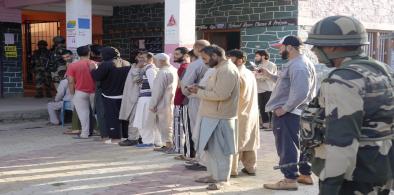
A prominent feature of this election is the massive influx of youth participation. Approximately 800,000 first-time voters are preparing to cast their ballots, and over 1,000 candidates under the age of 40 are contesting, signaling a profound generational shift. The political landscape is witnessing fierce competition between established traditional parties and emerging youth-centric forces. A key contest is unfolding in the Jhapa 5 constituency, a traditional stronghold where 35-year-old former Kathmandu mayor Balendra "Balen" Shah, representing the Rastriya Swatantra Party (RSP), is challenging former Prime Minister KP Sharma Oli of the Communist Party of Nepal (UML).   

Khamenei’s Killing: West Asia, Region at the Hormuz Flashpoint

Escalation around Iran narrows diplomatic manoeuvring room across South Asia. India has cultivated strong defence ties with Israel, expanded strategic cooperation with Washington and maintained pragmatic engagement with Tehran, particularly in connectivity and energy sectors. A widening US–Iran confrontation complicates this balancing act. 

AI: Social Disruptor or National Security Risk? How Will Countries Respond

There is a darker side to AI, it is now seen. Firms have established that AI can manipulate, blackmail and threaten. Findings by Anthropic have revealed that advanced AI systems can resort to blackmailing and threatening human users to achieve assigned goals or ensure their survival. As AI writes better versions of itself and big business powers it to seek new frontiers to occupy, will India re-skill and re-arm to keep its independence or run the risk of becoming a digitised colony?

More on Spotlight

Pakistan’s otherwise predictable election seeks to involve youth

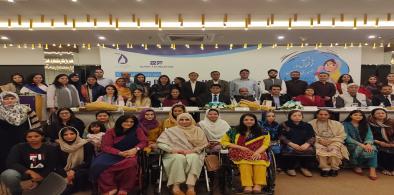
Besides youth, efforts have also been made to increase women’s inclusion in electoral politics. Section 206 of the Elections Act 2017 mandates at least 5 per cent women's representation in general seats. However, major political parties often award tickets to women for unwinnable seats and focus on swing constituencies.

Feminisation of agriculture in South Asia: Need to close the gender gap

Nobel Prize-winning economist Amartya Sen is a vehement supporter of granting land access to women and argues that economic empowerment is a critical step to realise the goal of gender equality and women’s empowerment.

With growing radicalization, Manipur remains on the boil

Ironically, recent actions will be playing into the hands of China which has a lien on many insurgent groups in Myanmar, including Meitei and Kuki-Naga groups, which it would use to destabilize northeast India.

Is it curtains for Imran Khan in Pakistan? Country entering choppy waters as election looms

It is a risible state of affairs in Pakistan where a three-time prime minister, who could have been in prison for ten years without going into exile returns, even as another one, Khan, is sentenced to ten 

Muslim nations must call out terrorists and withdraw clandestine support

Though a vast majority of Muslims oppose violent extremism, it is a reality that most extremist and terrorist violence does occur in largely Muslim states, although it mostly consists of attacks by Muslim extremists on fellow Muslims and not some clash between civilizations. 

India’s Ram Mandir consecration sparks celebrations, yet raises questions in Nepal

The way this was done raises questions about whether Hindus have been spiritually awakened and also what this means for India as an avowedly secular, democratic country.

Red Sea crisis: Domino effect on Bangladesh and global supply chain

The protracted Red Sea crisis may hurt Bangladesh's exports, stoke inflationary pressures, and delay the recovery of the economy. Bangladesh’s apparel sector is highly dependent on the route, as nearly 70 percent of the country's clothes are exported to European countries

Millets should be used as food and not for fuel

Worldwide sorghum is the fifth highest-produced grain crop and fourth in India. Nutritionally it is better than rice as it contains beta-carotene, folic acid, fiber, thiamine, and riboflavin.

Can India become a Hindu theocratic state post-Ayodhya consecration?

Advani was gracious enough to handwrite his answer in which he said, “The Indian Constitution guarantees equality and justice to all citizens, irrespective of their faith. The BJP holds that this commitment of our constitution makers is a commitment of the nation. Anything else would be contrary to our history, tradition and culture. The BJP rejects theocracy. In India, we can never have Class I citizens and Class II citizens as you have in Pakistan and several Islamic countries.” 

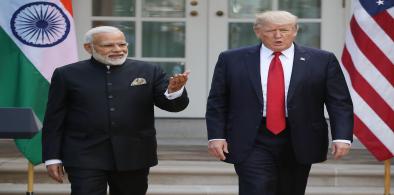
No sermons, but tougher on trade, closer on geostrategy: If he wins, Trump 2.0 will pick up threads of India ties

Trump took a broader view of the Indo-Pacific region and its role that aligned with India’s in a world where China assumes an increasingly aggressive posture towards neighbours and vies for global dominance. In his tenure, he extended the Pacific remit to the Indian Ocean, embracing India in the strategy for the region.

The Ram temple issues are socio-political, not just religious

While the real issue of Ram temple is social, it is also a political play at its zenith. In a politically charged nation, what we see are distorted views of the developments in Ayodhya.

Is social media hijacking the narrative, impacting governance and policies?

The adverse influence of uncontrolled social media in the relations between India and Maldives is a case in point. Social media poses an existential threat to the conventional methods of conducting governance, diplomacy, and warfare. 

Spreading extremism in Pakistan has ominous implications for region

Al-Qaeda's strategic plan involves aiding "persecuted" Kashmiri Muslims once their objectives in Pakistan are achieved. Shifting the jihadist threat toward Kashmir will also align with the ambitions of the Pakistani military. 

India’s stigmatized mental healthcare cries for prioritisation

In India's close-knit communities, mental health struggles often face a deafening silence. According to a study by Deloitte, over 70 per cent of Indians use derogatory terms for mental disorders and nearly 40 per cent voice fear of a neighbour seeking help for mental health issues.

Why India, with its huge backlog of unresolved cases, needs robo-judges

The recent passage of amended criminal laws in India highlights the challenges of human judges' adaptability, contrasting with the instantaneous application capabilities of robo-judges. COVID-19 accelerated technology integration in Indian courts, paving the way for the use of AI in judicial administration.