Representational Photo

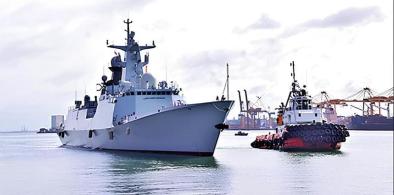
PNS Khaibar: A Milestone in Pakistan-Turkey Strategic Cooperation

With PNS Khaibar's delivery Pakistan and Türkiye are taking their relationship to a new level which is not limited to traditional political friendship. At the handover ceremony, Erdoğan described the relationship between the countries as "brotherly ties" and emphasised the need to further collaborate in defence production. The naval leadership of Pakistan also pointed to the fact that the partnership should benefit Pakistan in achieving its overall maritime modernisation.

A Nation At Crossroads: Islamist Terror, Minority Persecution, And The Burning of Bangladesh’s Conscience

What is unfolding in Bangladesh bears unsettling resemblance to trajectories seen in Pakistan and Afghanistan, where false blasphemy accusations have long been used to terrorize minorities and silence dissent. Once such violence is tolerated, it expands - devouring journalists, artists, reformist Muslims, and eventually the state itself.

Bangladesh–India Relations at a Crossroads: Needed Recalibration, Not Rupture

The current strains in Bangladesh–India relations should therefore be seen not as an inevitable deterioration, but as a test of diplomatic maturity. Bangladesh and India share more than geography and history; they share a responsibility to ensure that temporary political frictions do not harden into structural mistrust. In a time of regional uncertainty, neither country benefits from a relationship defined by grievance or miscommunication. 

A Dangerous Power Grab in Pakistan; Unpredictable Consequences For Region

The 27th Amendment, celebrated by its proponents as a security reform, is in reality a political coup executed through constitutional means. It marks not only Munir’s personal triumph but the institutional victory of the military over all other state authorities. As history warns, empowering any unelected institution above the republic’s elected will invites instability—not strength. Pakistan may soon discover that consolidating military power does not secure the nation’s future, but instead places it at greater risk

More on Spotlight

Strange Bedfellows: Why Pakistan’s Munir and Bangladesh’s Yunus Are Rekindling Ties

From a realistic perspective, the prospect of a Pakistan-Bangladesh axis does not herald a serious economic or strategic bloc. Instead, it signals the re-emergence of revisionist politics in South Asia. In seeking to rewrite history and align against India, both countries risk ignoring their own domestic crises. 

An Assault on Democracy in Bangladesh: Need to Have an Inclusive Electoral Process

Bangladesh now stands at a perilous crossroads. Either the nation allows this unelected regime to continue dismantling democratic institutions, silencing dissent, and rewriting history—or its citizens rise to reclaim their rights. Democracy cannot endure without inclusivity

Sri Lanka Needs to Find a ‘Political Common Ground’ in Its Foreign Policy

Championing a rules-based maritime order in the Indian Ocean, which Sri Lanka has long called for since its 1971 ‘Indian Ocean Peace Zone’ (IOPZ) proposal and ensuring strict adherence to the provisions of the ‘UN Convention on the Law of the Sea’ (UNCLOS), will reinforce Sri Lanka’s credibility and also encourage cooperative stability in the Indian Ocean.

Trump's Tariffs and India's Strategic Dilemma: Acid Test for Modi Government

For Modi, the political cost of appearing to bow to American pressure may be almost as high as the economic cost of resisting it. In the end, the tariffs are not just about commerce. They are a test of whether India can still straddle the fault lines of great-power rivalry—whether the world’s most populous democracy is being forced into the uncomfortable role of choosing sides.

US Positioning on Crypto Currency has implications for BRICS and South Asia

With the  Ukraine war  and  the resulting sanctions making it difficult for Russia to trade with its allies, being  barred from using SWIFT or the US dollar, it resulted in Russia resorting to local currencies to trade that resulted in the BRICS currency drawing adverse attention in Washington and gaining global imprtance.

From Laureate to Liability: The Unraveling of Yunus’s Interim Rule

In the end, Yunus may find that his greatest failure is not the scandals that have already emerged, but the corrosion of hope that followed him into office. A nation that once believed it had found a principled steward now sees another operator in the same tired political theater—just with better English and a Nobel medal.

The Tianjin Calculus: Modi, Xi, and the Unfinished Chapter of the 21st Century

The most probable outcome in Tianjin is what one Indian diplomat called a “tactical pause.” A cooling of tensions, a resumption of some economic and security dialogues, perhaps even a roadmap for regular high-level contact. That would be enough to stabilise the border and signal to Washington that India has options.

When Pakistan's Nuclear Blackmail Becomes A Currency: U.S. Silence and Strategic Choices for India

India is a responsible nuclear power, the world’s fastest-growing major economy, and a civilisation-state that does not live on borrowed credibility. It has the patience to navigate provocation and the capacity to respond decisively. If Pakistan’s military flirts with Armageddon, India will respond “BrahMostically” with unmatched precision and power.

The Asian Century by 2050: Three Possible Scenarios for Regional Power and Global Leadership

Whether dominated by China's singular might, led by India's democratic coalition, or governed through shared stewardship, the path Asia takes by 2050 will profoundly influence the global balance of power, ethical governance, and economic prosperity. India's role, whether as counterweight or partner to China, will be critical.

Assam's Demographic Dilemma: Will Politics of Population Divide or Unite Northeast India's Most Populous State?

A seminal 2020 study by Das and Talukdar outlines the socio-economic and political consequences of this migration. The authors note that the influx, particularly post-1971, has led to widespread fear among Assamese communities about becoming minorities in their own homeland. Migration has altered landholding patterns, changed linguistic profiles, and generated social unrest. 

Nepal Negotiating A Difficult Equilibrium Between China And India

With the steady return of Chinese tourists as well as expanding trade, China’s growing commercial footprint in Nepal is forcing Kathmandu to search for balance and sustainability in its economic engagement with China. It will also perhaps move India to compete more selectively to secure its commercial presence in the face of a resurgent Chinese involvement. 

A Reconfigured Geoeconomic Landscape Presents India With A Strategic Opportunity

India should reiterate its strategic autonomy publicly while making clear that it views strong ties with the US as vital. India insists its oil purchases from Russia are driven by economic necessity, not geopolitics, while questioning US-EU hypocrisy on Russia sanctions. Counter Trump's alignment with Pakistan and inflammatory rhetoric by highlighting India’s reliability as a global partner and democratic ally in the Indo‑Pacific.

The Art of Losing Friends: Modi’s 21-Day Gamble with Donald Trump

The unintended winner in this drama may well be China. Not just because Modi plans to travel to Beijing. If the trade standoff continues, Indian exporters—particularly in labor-intensive sectors like textiles, pharmaceuticals, electronics, and jewelry—will lose market share to Chinese and Vietnamese rivals, not to speak of South Asian rivals like Bangladesh and Pakistan, at least on textiles.

Who Is Leading the AI Innovation Race? India Can Lead New Wave of AI Innovation for Global South

India has many of the core ingredients necessary for AI leadership: A large and growing pool of STEM graduates (over one million annually). Pioneering digital public infrastructure, including Aadhaar, UPI, and CoWIN.Rich linguistic and cultural diversity to train context-sensitive, globally adaptable AI models.

US-India ties under Trump tariff strain: Major challenge for Modi government

In the light of his calculated avoidance of any media interaction in the last 11 years, it is unlikely that he would be asked what he meant by “personal price”. For a prime minister to say something that serious in such categorical terms requires attention. Conversely, it may just be in keeping with his penchant for political theater to keep his opponents and supporters guessing what he meant.