
Indian Cinema

Cinema Is Not Policy, But Films Like Dhurandhar Culturally Reflect India’s Place in the World


The progression from Purab Aur Pachhim to Dilwale Dulhania Le Jayenge to Dangal is not a neat policy timeline. It is something subtler: a cultural echo of India’s journey from caution to engagement to assertion. The shift is not just in policy documents or diplomatic speeches; it is embedded in how stories are told, how characters behave, and how audiences respond.

Trincomalee as Regional Oil Hub: Sri Lanka Needs to Act Decisively to Secure its Energy Future

Against this backdrop, in 2025, India, Sri Lanka, and the UAE signed a trilateral Memorandum of Understanding to jointly develop Trincomalee. The agreement, involving the Indian Ministry of Petroleum and Natural Gas, the UAE Ministry of Investment, and Sri Lanka’s Ministry of Energy, was designed to enhance Sri Lanka’s energy security and integrate the country into regional energy networks.

Pakistan’s Mediation Mirage: Strategic Posturing in a Fractured West Asia

Pakistan’s attempt to position itself as a peace broker in the Middle East may generate headlines, but it does little to advance the cause of stability. If anything, it underscores a larger truth: in high-stakes geopolitics, perceived neutrality without proven credibility is not an asset—it is a liability.

With Global Stability at Risk, India Must Initiate Efforts to De-escalate US–Israel–Iran Conflict

India’s leadership in global forums such as BRICS and the G20 further enhances its ability to bring together diverse stakeholders. Simultaneously, its role as a prominent voice of the Global South enables it to advocate for peace without appearing aligned with any specific 

More on Spotlight

PNS Khaibar: A Milestone in Pakistan-Turkey Strategic Cooperation

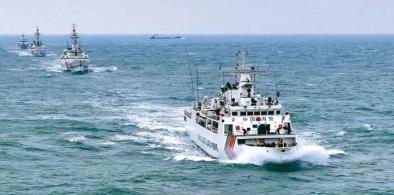
With PNS Khaibar's delivery Pakistan and Türkiye are taking their relationship to a new level which is not limited to traditional political friendship. At the handover ceremony, Erdoğan described the relationship between the countries as "brotherly ties" and emphasised the need to further collaborate in defence production. The naval leadership of Pakistan also pointed to the fact that the partnership should benefit Pakistan in achieving its overall maritime modernisation.

A Nation At Crossroads: Islamist Terror, Minority Persecution, And The Burning of Bangladesh’s Conscience

What is unfolding in Bangladesh bears unsettling resemblance to trajectories seen in Pakistan and Afghanistan, where false blasphemy accusations have long been used to terrorize minorities and silence dissent. Once such violence is tolerated, it expands - devouring journalists, artists, reformist Muslims, and eventually the state itself.

Bangladesh–India Relations at a Crossroads: Needed Recalibration, Not Rupture

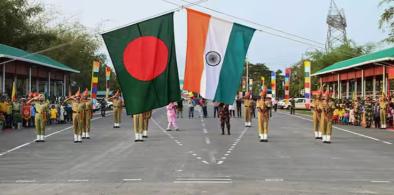
The current strains in Bangladesh–India relations should therefore be seen not as an inevitable deterioration, but as a test of diplomatic maturity. Bangladesh and India share more than geography and history; they share a responsibility to ensure that temporary political frictions do not harden into structural mistrust. In a time of regional uncertainty, neither country benefits from a relationship defined by grievance or miscommunication. 

A Dangerous Power Grab in Pakistan; Unpredictable Consequences For Region

The 27th Amendment, celebrated by its proponents as a security reform, is in reality a political coup executed through constitutional means. It marks not only Munir’s personal triumph but the institutional victory of the military over all other state authorities. As history warns, empowering any unelected institution above the republic’s elected will invites instability—not strength. Pakistan may soon discover that consolidating military power does not secure the nation’s future, but instead places it at greater risk

How Foreign Digital Influencers Are Tarnishing India’s Global Image

India must now transition from conventional soft-power thinking to visibility governance—the systematic management of how the country appears, circulates, and is emotionally interpreted across global platforms. Failure to do so will leave India’s global image increasingly shaped by commercial incentives outside Indian control.  

Afghanistan Should Not Get Caught In The India-Pakistan Strategic Rivalry

The strengthening of Taliban-India ties runs counter to Pakistan’s interests. The more border clashes intensify between the Taliban and Pakistan, the more secure the Kashmir region and the Line of Control (LoC) become for India. Under such conditions, Pakistan will remain preoccupied with its northwestern border, giving India a unique opportunity to consolidate its control over Kashmir and potentially weaken, drive out, or eliminate Kashmiri militant groups 

The Inescapable Grip Of Foreign Influence On Sri Lanka

Although U.S. military deployments overseas are common, their presence in Sri Lanka has historically been rare. For the first time, both Indian and American troops are now actively engaged in rescue and relief operations on Sri Lankan soil. This marks a significant departure from past sensitivities surrounding foreign military footprints in the island nation.

Turning Strategic Autonomy Into Genuine Influence: Route To A Resurgent India Runs Through Europe And The Global South

This twin strategy -- institutionalised engagement with Europe and practical leadership of the Global South -- would broaden India’s repertoire. A strengthened European partnership would sharpen India’s industrial and technological edge; robust South-South initiatives would deepen its diplomatic capital and soft power. Together they would blunt the effect of whimsical shifts in U.S. policy and give New Delhi greater leverage with Moscow and Beijing.

Putin’s visit to India: More Messaging Than Substance

India has thus far shown that it is willing to continue its friendship with Russia and expand relations in diverse areas from defence to energy, from manpower mobility to innovation, from investment and technology exchange to culture and tourism. In short, Putin’s visit was meant to prepare both countries to defy sanctions and explore new areas of cooperation - in Russia’s Far East and Arctic, cooperation in areas of climate change and green energy, and work together to strengthen multilateral forums like the BRICS, SCO and G-20.

Changing Bangladesh: Where Women Are Silently Rewriting the Rules of Society

The expansion of education in Bangladesh has played a key role in this transformation. Girls are now equal to boys in schools, colleges, and universities and sometimes even ahead of them. Women have proven their capabilities as doctors, engineers, teachers, researchers, and even pilots. This achievement is not just personal;  this is the evolution of the mentality of a society.

Whither SAARC, As Cyclone-Devastated Sri Lanka Seeks South Asian Climate Compact

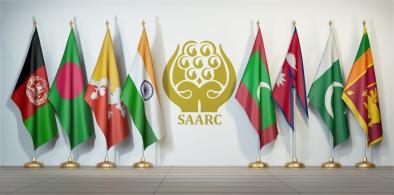
However. the desire to collaborate regionally has faced many hurdles such as geopolitical tensions arising from the India–Pakistan rivalry and limited SAARC summit activity that has greatly weakened implementation of regional initiatives. The Rapid Response Mechanism remains largely on paper, with no standing regional force or pre-positioned assets. Smaller nations like Bhutan, Maldives, Nepal and Sri Lanka face financial/technical limitations in aligning with regional standards.

White-Collar Terror And Their Radicalised Network In India

The exposure of a sophisticated white-collar terror network underscores the evolving nature of radicalisation and the need for comprehensive security reforms. Measures that merit consideration include: a)Reinstating long-term President’s Rule in J&K to stabilise governance and security; b) Implementing an organised, sustained deradicalisation programme, particularly among youth and educated professionals; c) Strengthening the permanent presence of the Indian Army in the Valley and increasing the number of cantonments; and d) Ensuring that elections are conducted only when broader community representation is viable, including Kashmiri Pandits, Dogras, Sikhs and other displaced groups

An Islamist Takeover in Bangladesh Can Have Dangerous Consequences

Bangladeshis can be found in the unlikeliest of places in search of gainful 'employment'. Recently two Bangladeshi militants were killed, reportedly in an anti-militancy raid in Pakistan. Two Bangladeshis were also found in the Ukraine war fighting in support of Russia as mercenaries. With financing and patronage, Bangladesh with a vast population of poor devout Muslims can potentially become an unlimited source of Islamic militants and suicide bombers for the rest of the world.

Putin’s Visit Shows How India Uses Multipolarity as a Shield, Not a Slogan

Putin’s 2025 visit to New Delhi was a strategic demonstration of India’s contemporary foreign policy, not a sentimental reunion. For India, multipolarity is a toolkit — a defense built on diverse partnerships, institutional investments, and internal resilience, not an abstract idea. Yet a shield can fail if it is brittle or hollow. To ensure multipolarity remains a durable defense, New Delhi must convert diplomatic goodwill into operational readiness by strengthening domestic supply chains, addressing payment and logistical gaps, and sustaining principled diplomacy that safeguards India’s international standing. Otherwise, multipolarity risks becoming a comforting phrase rather than real protection.

Lessons From An Indian Epic: Mahabharata Holds A Mirror To Today's World

The Mahabharata’s deepest warning is stark and sobering: nations rarely fall because of external enemies alone. They fall because of internal decay. Hastinapur did not collapse under foreign assault. Its destruction was the inevitable outcome of accumulated resentment, festering grievances, unchecked ambition, wounded egos, and a collective failure to address its own fault lines. The gates were opened from within, and once the poison reached its tipping point, war became unavoidable.