
Colombo Port City

China’s Criminal Footprint in Sri Lanka has Regional Security Implications

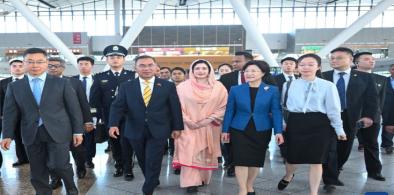
When a Chinese company won the contract to establish hybrid wind and solar energy projects on three islands off the northern Jaffna peninsula—just 45 km from Rameswaram in Tamil Nadu—the security implications extended far beyond economics. Against this backdrop, India’s concerns are entirely justifiable. Sri Lanka faces a pressing question: how will the nation confront the infiltration of Chinese global criminal networks? Since Mahinda Rajapaksa’s tenure, Chinese presence in Colombo has steadily increased, with Sri Lanka positioned as a partner state in Beijing’s Belt and Road Initiative.

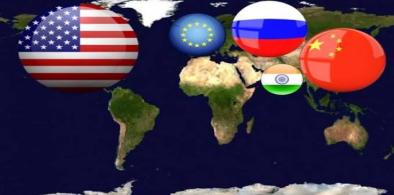
Wolf World or a Multipolar World? How Major Powers Exercise Power Will Determine Emerging International Order

The growing role of middle powers adds another layer of complexity. Yet the term itself remains imprecise. Not every country outside the United States and China qualifies as a middle power, and many reject the label altogether. India, for example, increasingly sees itself as a leading power pursuing strategic autonomy rather than as a middle power seeking alignment with one bloc or another.

Is Northeast India's Permit System Inhibiting India-Japan Paradiplomacy? Colonial-Era System may be Stumbling Block to Subnational Exchanges

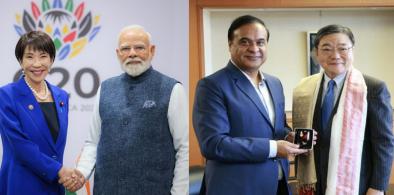
If India and Japan genuinely envision Northeast India as the gateway connecting South Asia with the Bay of Bengal and the Indo-Pacific, then the next chapter of the partnership cannot remain confined to New Delhi and Tokyo. It must also be written in Guwahati, Shillong, Aizawl, Imphal, Agartala, Kohima, Gangtok and Itanagar 

Bangladesh's Strategic Balancing and India's Neighbourhood Challenge: China Will Consolidate Influence if New Delhi Fails to Deliver

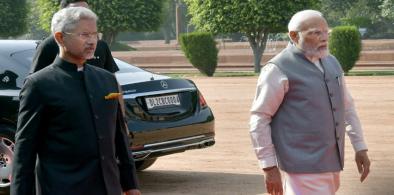
In several neighbouring countries, including Bangladesh, Sri Lanka and Nepal, China has demonstrated an ability to move from agreements to implementation far more rapidly than many competitors. India, despite enjoying unmatched geographic and cultural advantages, has often struggled with delays 

More on Geopolitics, Security and Strategic Affairs

Will A Rightwing Victory Transform Bangladesh? Jamaat's Rise Raises Uncomfortable Questions

If Jamaat comes to power it will likely begin with populist moves such as anti-corruption drives, predicts Ahmedur Chowdhury, a Bangladeshi writer and editor who has been living in Norway since surviving a 2015 attack. He says he fears  mobilisation of religious groups to push for declaring Bangladesh an Islamic republic and enforce Sharia law. The result would be shrinking freedoms for women, curbs on cultural life, and serious threats to freedom of expression, religious minorities, and secular political and cultural spaces.

Pakistan Mosque Blast: ISIS' Growing Shadow In The Subcontinent

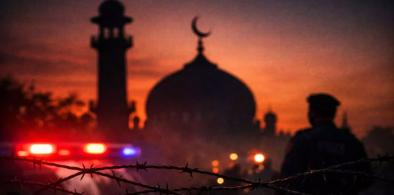
The threat from ISIS-K is real and growing. A resurgence in Pakistan would have serious implications for the broader region, including India. The danger is compounded if Pakistan once again attempts to clandestinely redirect ISIS-K towards Kashmir. What may appear as an isolated terror incident is, in fact, part of a wider pattern that demands sustained vigilance. Pakistan’s internal security instability risks creating openings for cross-border terror movements, potentially hardening new militant modules aimed at India and beyond.

After the Begums: Battle For The Soul Of Bangladesh Has Just Begun

The optimistic view is that the “Twin Election” will force a compromise. The referendum provides a mandate for reform that even a BNP government cannot ignore. The “July Charter”, if ratified, creates checks on executive power that did not exist before. The students, even if they end up on the opposition benches, will form a moral pressure group that cannot be easily crushed. The cynical view is that Bangladesh is merely swapping a monopoly for a duopoly, or worse, a monopoly of a different colour.

Bangladesh Heads to Crucial Elections Amid Political Exclusion: A Divided Nation Needs Democratic Renewal

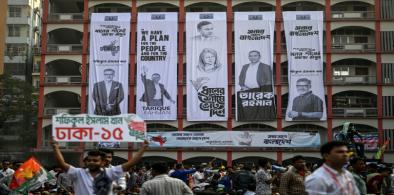
All signs point to a BNP victory. In a competitive contest without the Awami League, the BNP’s organisational depth and electoral reach make it the frontrunner. Yet victory alone may not translate into authority. The absence of the Awami League, the continued influence of Sheikh Hasina from exile, the rise of Islamist alternatives, and the central role of unelected institutions mean that any new government will inherit a fractured polity. The 2026 election may revive the BNP’s fortunes, but it will not by itself heal Bangladesh’s democratic wounds.

Crunch Point For World Cricket: Power Politics And Double Standards Unfairly Rob Bangladesh Of Participation

Ultimately, Bangladesh’s absence from the 10th edition of the T20 World Cup was the result of the BCCI’s ego and the ICC’s double standards where power politics and selective decision-making outweighed fairness and sporting integrity. Although many view the Pakistan Cricket Board’s support for Bangladesh positively, in reality it is also a strategic move to counter India for its own strategic benefit. If the match is boycotted, Bangladesh will suffer even greater financial and administrative losses. 


Jaish-e-Mohammed's Female Brigade: ISI-Backed New Jihadi Units Intensify Counterterrorism Challenges in South Asia

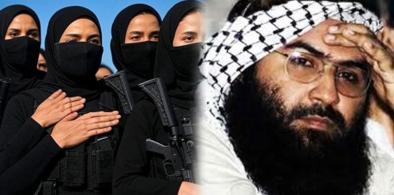
Unlike earlier jihadist cells dominated by Pakistani nationals, this unit deliberately recruits women from Indonesia, the Philippines, Uzbekistan, and other foreign countries. Reason behind recruiting non-Pakistani nationals serves a dual purpose: it complicates attribution and shields Pakistan’s security apparatus from direct accountability. Such operational sophistication reflects ISI’s continued role not merely as a passive enabler but as an active architect of jihadist adaptation.

Securing The Digital Frontier: A Unified Call For Cybersecurity In South Asia

South Asia has the potential to be a global digital leader. It has a young population and a booming tech industry. However, this potential will only be realized if the region is secure. We must treat cybersecurity as a pillar of national security, just like border defense. This requires better technology, smarter laws, and stronger regional ties. The digital threats of 2026 are fast and complex. To meet them, South Asia must be faster and more united. The time to build a collective digital shield is now, before the next major crisis occurs.

Aid, Ports, And The Limits of Incrementalism: What India’s Budget Says About Its Foreign Policy

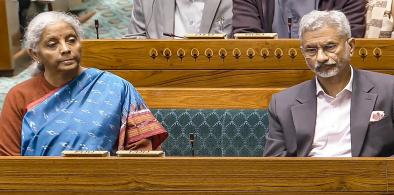
Yet the strategic costs are real. Reduced engagement in Bangladesh risks ceding influence at a moment when Dhaka is actively diversifying its partnerships. Hesitation over Chabahar weakens India’s leverage in Iran and Central Asia and underscores its vulnerability to US pressure even as it seeks a more multipolar foreign policy. The 2026–27 Budget does not signal a dramatic shift in Indian foreign policy. There is no abandonment of neighbours-first rhetoric or of connectivity-led diplomacy. What it reveals instead is a narrowing circle of feasible economic action.
 

Mob Rule As Political Strategy: Reshaping Bangladesh's Secular Memory And Pluralistic Bengali Culture

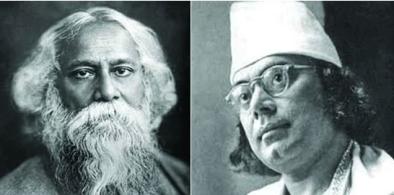
The ideals of 1971 represent inclusivity, human dignity, and resistance to oppression. Baul and Sufi traditions reject radical views and promote humanism and coexistence. Islam in Bengal arrived largely through Sufis—from Persia, Arabia, and Central Asia—who emphasized spirituality, tolerance, and accommodation. These traditions resonated with local Hindu practices and gave rise to syncretic forms such as Baul philosophy. Rabindranath Tagore and Nazrul Islam embodied this civilizational synthesis.     
 

How the US Misreads Bangladesh: Backing Dubious Figures Can Have Dangerous Implications

Bangladesh is almost entirely surrounded by India, with Myanmar forming a smaller eastern frontier. India remains the dominant regional power and Bangladesh’s most consequential neighbor in economic, cultural, and security terms. Any American strategy in Bangladesh that ignores India is inherently flawed. Aligning regionally with Pakistan—a country with which Bangladesh shares a traumatic history—offers Washington no meaningful strategic advantage in Dhaka.  

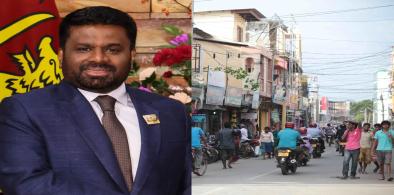
Power Sharing For Sri Lanka's Tamils: Does The JVP Have The Chinese System In Mind?

Despite expectations that the JVP would move in a pro-Chinese direction after coming to power, not shown such moves so far. Instead, there has been moderation. China’s wolf-warrior moves of the Rajapaksa era also seem to have faced setbacks. Meanwhile, global politics is shifting, with regional hegemony once again becoming visible. In this context, will the JVP attempt to sever India’s long-standing engagement with Sri Lankan Tamils?

Air Pollution Knows No Borders: Smog Over Kathmandu Is A Regional Failure

As the World Bank notes, isolated national actions are insufficient when pollution itself ignores borders. India, Nepal, Bangladesh, and Pakistan share the same airshed. Without cooperation, each country keeps breathing its neighbour’s mistakes. “As the government representing the largest population affected by air pollution, India should lead this effort. Instead, the region has drifted away from cooperation, and the cost has been catastrophic,” Dr Subedee said.

When Cricket Stops Being ‘Just Cricket’: South Asian Sporting Diplomacy in Retreat

This is certainly not a call to romanticise sport or overstate its diplomatic capacity. Neither did cricket ever resolve South Asia’s conflicts. But it softened their edges. It reminded the public that despite borders and disputes there existed a cultural language. The erosion of that language should now concern the whole of South Asia. Because when even the simplest forms of cultural exchange become difficult, rebuilding trust happens to be infinitely harder.      

Bangladesh’s February Referendum and the Future of Secularism

Bangladesh, though Muslim‑majority, has historically significant Hindu, Buddhist, Christian, and Indigenous minorities. Removing secularism would create a profound democratic dilemma as it is the safeguard against majoritarian dominance and structural exclusion. The South Asian experience shows the risks of privileging religion in constitutions.

With India-EU Trade Deal, It's Time To Recast India's Foreign Policy

What India next needs to consider is opening a dialogue with Beijing, while remaining mindful of its security concerns. Years of hostility and China’s anti-India posturing, coupled with its hegemonic aspirations, have understandably created an atmosphere of deep distrust. However, the atmospherics are now right for a rethink as to whether current distancing serves mutual interest. The middle path approach justifies seeking out areas of collaboration, especially through enhanced trade and thereby dilute the overdependence on the US market, both for China and for India.