
Representational Photo

India's Gen Z Cockroach Revolt: Ignoring Youthspeak can be at Democracy's Own Peril

The rise of the Cockroach Janata Party may ultimately fade as quickly as it appeared. Most internet movements do. But the frustrations driving it are real and unlikely to disappear soon. Millions of young Indians feel politically unheard and economically cornered. Increasingly, they are expressing that frustration not through traditional political participation, but through irony, parody and nihilistic humour.

Can the Cockroach Janata Party Survive Beyond Social Media Hashtags?

At another level, it reveals a growing impatience with conventional politics. When citizens feel unheard, they often resort to satire as a form of protest. The joke becomes a shield, allowing them to express dissent without fully committing to a cause. But there is also a risk

Of Cockroaches, Prejudice and the Language of Justice

The tendency to over-categorise and group citizens under labels is a slippery slope. It leads to the ‘them’ versus ‘us’ divide that silences voices standing up to the dominant narratives of our times, oversimplifies what are complex issues and, in the end, does not serve the cause of justice. Categorising all environmentalists or all trade unions or indeed the youth, positively or negatively, betrays a prejudice Of Cockroaches, Prejudice and the Language of Justice

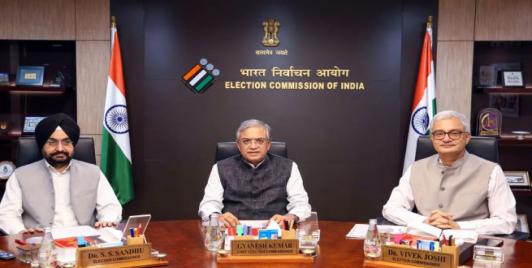
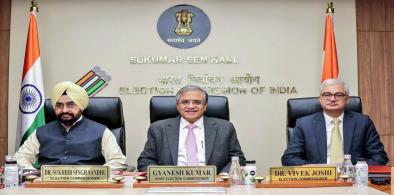
Voter Name Deletions, Denial of Voting Rights Blot on India's Elections

Only a peaceful, Gandhian ‘feet on the ground’ movement can save our 1950 compact. The values embedded in that 1950 compact: Liberty, Equality, Fraternity, Justice, Secularism, can be defended only by that. Each one of us must decide and work for rescuing the republic and the Idea of India. Keep in mind that everyone who lives in this land owns this country. It’s not owned by any one denomination, religion, caste, creed, region, colour, eating and dressing habits and traditions. It’s owned by everyone.

More on Public Policy and Governance

To rebuild Bangladesh interim government needs to reconcile rival ideological camps

Bangladesh is home to people of different religions and cultures, both in the hills and plains. The extreme polarization of thought and ideology between opposing ideological groups is impacting Bangladesh's social fabric. 

Policy reversals and lessons for the Modi government

The BJP is not really taking on the immense political challenge of explaining and then persuading the people to go with the right-wing turns in policies it seeks to implement; it is sneaking it in, and in that it is being met with defeat after defeat.

How the world failed Afghanistan: Three years since the Taliban's return to power

When the world descended on Afghanistan in 2001, Afghans believed it was about them, about a better life for them. It never was. It never is, writes senior reporter Kathy Gannon, who has covered Afghanistan since the 1980s. Looking back at the second Taliban takeover in 2021 she looks at why the ironically named ‘Operation Enduring Freedom’ of 2001 failed and how the aspirations of Afghans have been ignored.

Is Sri Lanka’s state sector inefficient? Facts point to the contrary

Sri Lanka’s current HDI score stands at 0.78 and is the highest in South Asia.

India's healthcare institutions need more women at the helm

A message from the Kolkata case is to rebuild our healthcare workplaces with the intent of making them safe and gender inclusive.
 

India's discredited coaching centres: Can they redeem themselves in the eyes of students and aspirants?

The exams for IITs, IIMs, Civil Services, in particular, are strong pointers on how traditional pedagogy and mindset of our educational institutions towards learning is found severely inadequate and deficient, and call for a paradigm shift towards critical thinking and building wider perspectives.

Hasina destroyed Bangladesh’s economy; caretaker government needs to handle it well to restore people's confidence

Many of the oligarchic business syndicates that formed around the deposed Sheikh Hasina are now on the run. But their vast industrial establishments remain. It is essential to sustain these industries. Millions of people are working in these establishments that are playing a critical role in the production sector of the country. These industries cannot be shut down because of the crimes of their leaders. 

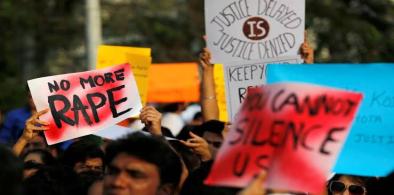
Threat of sexual violence will deter Indian women’s participation in workforce

After the Nirbhaya case in India, the laws were tightened against sexual violence. We also have stringent laws against child abuse. Yet the laws have not stopped reported sexual crimes from growing as the NCRB data shows.

Changes in visa rules will impact Indian student flow to Western countries

Indian students comprise a significant percentage of the global international student community in not just Canada, but the US, UK and Australia. Some of the changes introduced by Western governments will create challenges in the short run, but they may be good in the long term.

Indian Armed Forces' stellar role in Wayanad disaster relief: Serving the nation in crises

What became a reason for special attention was that the Madras Sappers were led by a woman officer, Major Sita Ashok Shelke. This single-woman officer in a 150-strong team worked hands-on with the locals during the construction,  planning the move of stores, approving the design and ensuring a safe, speedy launch. If the men kept awake for two nights, her responsibility required an even longer spell without sleep.

Violence against Hindus in Bangladesh is a boost to Islamophobia in India

Now, the two important power centres in Bangladesh are the interim government led by Prof Muhammad Yunus and the students who led the protests. Both are stressing the inclusive character of Bangladesh and taking a strong position on the protection of Hindus and other minorities.

Bangladesh in transition: Much to learn from Prof. Yunus and his philosophy

Yet, this will be a delicate task that may test India much more than Bangladesh. This is because the secular credo of Yunus and a pro-poor agenda that has defined his work and his life pose a unique political challenge to the agenda of right-wing politics that holds centre stage in India.

Is the Ganga water treaty between India and Bangladesh at risk?

Thus, the renewal of the Ganges water treaty is much more dependent on the bilateral relations between the two countries. Under the present conditions, there are politically driven ideological differences between both countries that may carry adverse consequences for the Ganga treaty. 

India’s sports bosses need to answer for its Olympic fiasco and poor showing

Shouldn’t we reflect as a nation of 1.4 billion people, with 117 participants at the Paris Olympics, winning only six medals (that included no gold) and ranked 71 among participating countries? Can we not learn from much smaller countries, some indeed tiny,  that won several gold and silver medals and ranked above India?

India needs to change the way we think

India must look to improve the quality of education and make it affordable equally to all irrespective of religion or caste. Else, we will continue to feel safe in “reservations” and never ever look at improving the quality of the society