
Slums in Mumbai, air pollution in Delhi, floods in Dhaka

South Asia’s Cities Are Growing - But May Not Remain Livable

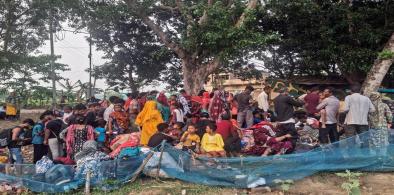
What is unfolding across South Asia’s cities is not just an urban crisis, it is a reflection of deeper tensions within development itself. Growth is happening, but it is not translating into stability. Opportunities exist, but they are unevenly distributed. Systems are expanding, but not fast enough to keep up with demand. Cities, which have long been seen as places where people come to improve their lives, are increasingly becoming spaces where people struggle to sustain them. 

Why Can't South Asia trade with itself? Tariff Shock Can be Turned Into Opportunity

South Asia’s tragedy is not geography or lack of industrial capacity. It is the failure to convert proximity into predictable partnerships. Trump’s tariff threats could remain episodic political theatre, or they could signal a more protectionist global environment. Either way, South Asia’s dependence on Western concessions exposes it to recurring uncertainty. Reviving SAFTA in spirit and substance would not eliminate trade with the West. It would diversify risk and embed value creation within the region.

Gulf War Strains Bangladesh's Economic Fragility, Test for New Government

The current war has exposed Bangladesh’s structural vulnerabilities: dependence on imported energy, fragile reserves, and narrow fiscal space. For the new government, the stakes are clear—stabilize fuel and food supplies now while building resilience through diversified energy, broader exports, and stronger social protection. Wars in the Gulf may be fought thousands of miles away, but their economic shockwaves reach Bangladesh within days. In the end, the crisis will be felt in three simple pressures shaping everyday life: oil prices, food costs, and migrant jobs.

Re-imagining Pakistan’s Human Capital Crisis: It Must Dismantle Policy Structures That Serve Elite Interests

This crisis did not emerge overnight. It is a product of neglecting the foundational capacity to invest in human capital, where Pakistan hardly puts less than 2% of its national GDP on human capital factors. Meanwhile, the regional peers like Bangladesh and India invest more in education and health, and Pakistan is still trapped in a cycle of short-term fiscal thinking, political instability, and elite capture that is systematically hollowing out the nation’s potential to rise and grow.

More on Spotlight

Bangladesh’s February Referendum and the Future of Secularism

Bangladesh, though Muslim‑majority, has historically significant Hindu, Buddhist, Christian, and Indigenous minorities. Removing secularism would create a profound democratic dilemma as it is the safeguard against majoritarian dominance and structural exclusion. The South Asian experience shows the risks of privileging religion in constitutions.

With India-EU Trade Deal, It's Time To Recast India's Foreign Policy

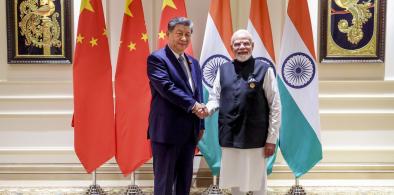
What India next needs to consider is opening a dialogue with Beijing, while remaining mindful of its security concerns. Years of hostility and China’s anti-India posturing, coupled with its hegemonic aspirations, have understandably created an atmosphere of deep distrust. However, the atmospherics are now right for a rethink as to whether current distancing serves mutual interest. The middle path approach justifies seeking out areas of collaboration, especially through enhanced trade and thereby dilute the overdependence on the US market, both for China and for India.

Bangladesh Drifting Into A Nexus Of Military Dependency And Proxy Competition? Ominous Consequences For India, South Asia

Taken together, these developments should ring alarm bells. The convergence of foreign military-industrial interests, Islamist political forces, and great-power rivalry risks turning Bangladesh into an epicenter of proxy competition and ideological confrontation. For a nation that has paid dearly for its independence and pluralistic identity, the cost of such entanglements may prove far higher than the short-term gains promised by arms deals and infrastructure projects.

Between Treaty And Truth: Sri Lanka's Conflict-Related Sexual Violence And Limits Of International Law

Sri Lanka's case highlights the central weakness of the ICC’s complementarity principle. The Rome Statute grants jurisdiction only where states are unwilling or unable genuinely to carry out the investigation or prosecution. Sri Lanka maintains functioning judicial institutions, conducts some prosecutions, and has established reparations frameworks, thereby technically satisfying the ability threshold while systematically failing to deliver accountability for conflict-related crimes.

Davos: Noise, Narratives, And The Reality Beneath

If Davos had a clear centre of gravity this year, it was technology—not geopolitics. The tech industry arrived in force, underscored by high-profile appearances from Elon Musk and Nvidia CEO Jensen Huang. The message was unmistakable: this is where attention, ambition, and capital are converging. With extraordinary sums being poured into artificial intelligence, unease among lenders and investors is understandable. Yet many executives were keen to reassure markets that fears of an AI bubble were overstated.

Abandoned U.S. Weapons Empowering Terrorists, Undermining Pakistan’s And Regional Security

Strategically, these developments underscore the importance of regional counterterrorism cooperation and rigorous monitoring of cross-border arms flows. The proliferation of foreign-supplied weapons into Pakistan not only strengthens terrorist organizations but also threatens regional stability. Each attack executed with U.S.-origin rifles or advanced tactical gear reinforces the need for Pakistan’s zero-tolerance policy against militancy while exposing the organized external support networks that continue to embolden groups like the TTP.

A Year of Dissanayake Government: People Keeping Faith Despite Disappointments

It is not easy for a country faced with heavy debt payments to find resources to accelerate domestic growth, exports and infrastructure development. It has to carefully balance infrastructure priorities, social spending, and ongoing economic reforms. Next two years will be crucial for the government  to at least complete the ongoing projects to fulfil major promises while taking up the remaining ones that were temporarily shelved for early implementation.

India-UAE Defence Cooperation Is A Comprehensive Strategic Alliance With Wider Regional Ramifications

The India-UAE military equipment cooperation is a burgeoning strategic partnership focused on joint production, technology transfer, and industrial collaboration, moving beyond mere arms sales to build a self-reliant defence ecosystem, support India's 'Make in India' initiative, and establish the UAE as a gateway to African/Middle Eastern markets, creating a mutually beneficial, politically neutral defence bloc for regional stability and economic growth.

Is Revolutionary Politics Replacing Constitutional Rule In Bangladesh?

The strategic consequences extend well beyond Dhaka. Bangladesh occupies a critical position in the Bay of Bengal, bordering major sea lanes and neighboring one of the world’s most volatile regions. A Bangladesh drifting toward extra-constitutional governance while deepening ties with China and Pakistan would alter regional dynamics in ways that merit serious attention in Washington and European capitals.

India Must Recalibrate Its Grand Strategy To Face Emerging Geopolitical Headwinds

Today, India’s grand strategy faces a similarly critical moment—this time shaped not by the Kissinger Doctrine but by the Donroe Doctrine. New Delhi must avoid relying on limited or incremental approaches. Instead, its strategy must be upgraded to a level that allows it to take calculated risks, withstand U.S. diplomatic blitzkrieg, and navigate an anxiety-ridden global order with greater resilience and confidence.

Greenland, Great Power Politics, And India’s Strategic Imperative: A Realist Geopolitical Analysis

Greenland’s geopolitical prominence illustrates how a distant region can reflect deeper shifts in global power, economics, and security. For countries like India, Greenland is not about territorial ambition; it is a reminder that structural shifts in global power dynamics transcend geography. In a realist world, engagement is not optional; it is necessary for safeguarding long-term interests in a system where power continually redistributes itself. 

The Quiet Unraveling Of The Global Nuclear Order And Its Dangerous Implications

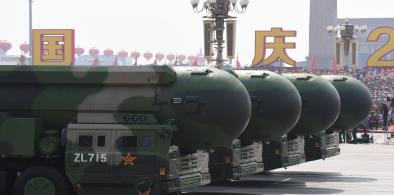
According to realist paradigms, nuclear weapons can be seen as the ultimate guarantee of national security and when there will be no restrictions, states will strive to dominate or achieve parity. Lapse of New START can thus create worsening security dilemmas, where efforts of any state to enhance its deterrent value is seen as a threat, and the state retaliates. The position of nuclear weapons as power projectors will, therefore, be more intense. 

Back-To-Back Visits And Differential Access: Sri Lanka’s Clever Foreign Policy Balancing Between India And China

Some analysts are of the view that Sri Lanka’s differential access — full executive level for India versus foreign ministry level for China — may reflect Sri Lanka’s carefully calibrated foreign policy. Sri Lanka is leveraging India for urgent, high-impact assistance and wider policy coordination and engaging China for strategic reassurance and medium-to-long-term cooperative alignment that is less intertwined with immediate executive decisions.

Power In A Fragmented World: India Needs To Master Torque

India’s challenge, and opportunity, lies in mastering torque rather than seeking a mythical centre of gravity. In a world defined by flux, leverage matters more than alignment, and agility matters more than allegiance. Strategic autonomy will not be preserved through rigid doctrines, but through continuous recalibration anchored in national interest, economic resilience, and confidence in India’s civilisational depth.

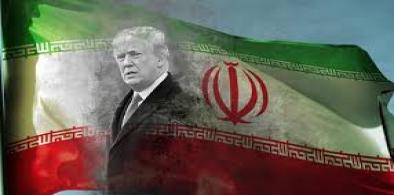
Iran's Crisis Has Repercussions Beyond Borders: Will Sovereignty Survive Only By Permission?

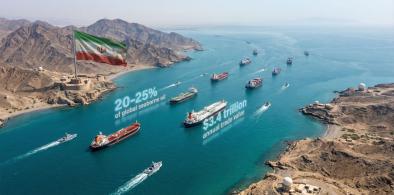
India’s response to Iran’s crisis illustrates the dilemmas facing middle powers navigating a polarised global order. While reaffirming principles of sovereignty, non-intervention and dialogue, New Delhi has largely confined itself to cautious diplomacy. For a country that positions itself as a voice of the Global South and a defender of strategic autonomy, such restraint invites scrutiny. Silence at moments of legal strain is never neutral. It contributes to the gradual normalisation of coercive precedent.