
Representational Photo

Jaish-e-Mohammed's Female Brigade: ISI-Backed New Jihadi Units Intensify Counterterrorism Challenges in South Asia

Unlike earlier jihadist cells dominated by Pakistani nationals, this unit deliberately recruits women from Indonesia, the Philippines, Uzbekistan, and other foreign countries. Reason behind recruiting non-Pakistani nationals serves a dual purpose: it complicates attribution and shields Pakistan’s security apparatus from direct accountability. Such operational sophistication reflects ISI’s continued role not merely as a passive enabler but as an active architect of jihadist adaptation.

Securing The Digital Frontier: A Unified Call For Cybersecurity In South Asia

South Asia has the potential to be a global digital leader. It has a young population and a booming tech industry. However, this potential will only be realized if the region is secure. We must treat cybersecurity as a pillar of national security, just like border defense. This requires better technology, smarter laws, and stronger regional ties. The digital threats of 2026 are fast and complex. To meet them, South Asia must be faster and more united. The time to build a collective digital shield is now, before the next major crisis occurs.

Aid, Ports, And The Limits of Incrementalism: What India’s Budget Says About Its Foreign Policy

Yet the strategic costs are real. Reduced engagement in Bangladesh risks ceding influence at a moment when Dhaka is actively diversifying its partnerships. Hesitation over Chabahar weakens India’s leverage in Iran and Central Asia and underscores its vulnerability to US pressure even as it seeks a more multipolar foreign policy. The 2026–27 Budget does not signal a dramatic shift in Indian foreign policy. There is no abandonment of neighbours-first rhetoric or of connectivity-led diplomacy. What it reveals instead is a narrowing circle of feasible economic action.
 

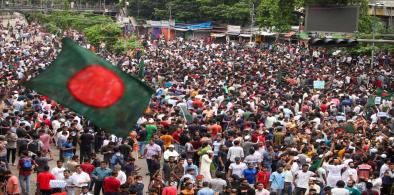
Mob Rule As Political Strategy: Reshaping Bangladesh's Secular Memory And Pluralistic Bengali Culture

The ideals of 1971 represent inclusivity, human dignity, and resistance to oppression. Baul and Sufi traditions reject radical views and promote humanism and coexistence. Islam in Bengal arrived largely through Sufis—from Persia, Arabia, and Central Asia—who emphasized spirituality, tolerance, and accommodation. These traditions resonated with local Hindu practices and gave rise to syncretic forms such as Baul philosophy. Rabindranath Tagore and Nazrul Islam embodied this civilizational synthesis.     
 

More on Spotlight

With growing radicalization, Manipur remains on the boil

Ironically, recent actions will be playing into the hands of China which has a lien on many insurgent groups in Myanmar, including Meitei and Kuki-Naga groups, which it would use to destabilize northeast India.

Is it curtains for Imran Khan in Pakistan? Country entering choppy waters as election looms

It is a risible state of affairs in Pakistan where a three-time prime minister, who could have been in prison for ten years without going into exile returns, even as another one, Khan, is sentenced to ten 

Muslim nations must call out terrorists and withdraw clandestine support

Though a vast majority of Muslims oppose violent extremism, it is a reality that most extremist and terrorist violence does occur in largely Muslim states, although it mostly consists of attacks by Muslim extremists on fellow Muslims and not some clash between civilizations. 

India’s Ram Mandir consecration sparks celebrations, yet raises questions in Nepal

The way this was done raises questions about whether Hindus have been spiritually awakened and also what this means for India as an avowedly secular, democratic country.

Red Sea crisis: Domino effect on Bangladesh and global supply chain

The protracted Red Sea crisis may hurt Bangladesh's exports, stoke inflationary pressures, and delay the recovery of the economy. Bangladesh’s apparel sector is highly dependent on the route, as nearly 70 percent of the country's clothes are exported to European countries

Millets should be used as food and not for fuel

Worldwide sorghum is the fifth highest-produced grain crop and fourth in India. Nutritionally it is better than rice as it contains beta-carotene, folic acid, fiber, thiamine, and riboflavin.

Can India become a Hindu theocratic state post-Ayodhya consecration?

Advani was gracious enough to handwrite his answer in which he said, “The Indian Constitution guarantees equality and justice to all citizens, irrespective of their faith. The BJP holds that this commitment of our constitution makers is a commitment of the nation. Anything else would be contrary to our history, tradition and culture. The BJP rejects theocracy. In India, we can never have Class I citizens and Class II citizens as you have in Pakistan and several Islamic countries.” 

No sermons, but tougher on trade, closer on geostrategy: If he wins, Trump 2.0 will pick up threads of India ties

Trump took a broader view of the Indo-Pacific region and its role that aligned with India’s in a world where China assumes an increasingly aggressive posture towards neighbours and vies for global dominance. In his tenure, he extended the Pacific remit to the Indian Ocean, embracing India in the strategy for the region.

The Ram temple issues are socio-political, not just religious

While the real issue of Ram temple is social, it is also a political play at its zenith. In a politically charged nation, what we see are distorted views of the developments in Ayodhya.

Is social media hijacking the narrative, impacting governance and policies?

The adverse influence of uncontrolled social media in the relations between India and Maldives is a case in point. Social media poses an existential threat to the conventional methods of conducting governance, diplomacy, and warfare. 

Spreading extremism in Pakistan has ominous implications for region

Al-Qaeda's strategic plan involves aiding "persecuted" Kashmiri Muslims once their objectives in Pakistan are achieved. Shifting the jihadist threat toward Kashmir will also align with the ambitions of the Pakistani military. 

India’s stigmatized mental healthcare cries for prioritisation

In India's close-knit communities, mental health struggles often face a deafening silence. According to a study by Deloitte, over 70 per cent of Indians use derogatory terms for mental disorders and nearly 40 per cent voice fear of a neighbour seeking help for mental health issues.

Why India, with its huge backlog of unresolved cases, needs robo-judges

The recent passage of amended criminal laws in India highlights the challenges of human judges' adaptability, contrasting with the instantaneous application capabilities of robo-judges. COVID-19 accelerated technology integration in Indian courts, paving the way for the use of AI in judicial administration. 

Recounting Indian Navy's1971 valour: Questions before the nation

With the spectacular achievements of the Indian Navy in the 1971 war under the daring and decisive leadership of Admiral Nanda, he could well have been considered for being made Admiral of the Fleet. As this involves rectifying past oversights, there are already precedents.

BNP's miscalculation can prove costly for party and Bangladesh

The absence of a strong opposition can potentially pave the way for the ascendancy of authoritarian, dictatorial, or undemocratic forces within the country's political sphere.