The struggle for building a Ram Temple should be seen as a clash between civilizational values, writes Arun Anand for South Asia Monitor


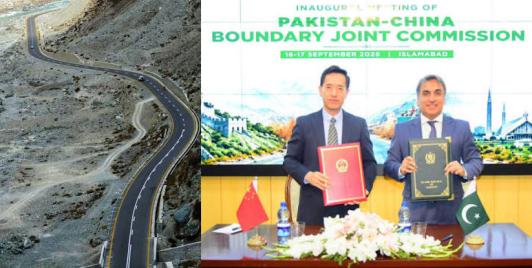
The Pakistan-China Boundary Joint Commission needs to be viewed in backdrop of the fast-changing geopolitics of South Asia and its military implications. The Shaksgam Valley sits immediately north of the Siachen Glacier and just west of Aksai Chin under China's control. By controlling Shaksgam, China can jointly monitor Indian military movements from the north while Pakistan does so from the south.
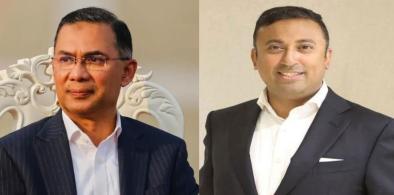
The question, therefore, is not whether Bangladesh could have secured a particular agreement simply by attending. There is no guarantee that participation in a summit automatically produces investment or diplomatic breakthroughs. The question is whether Bangladesh benefited by being absent.
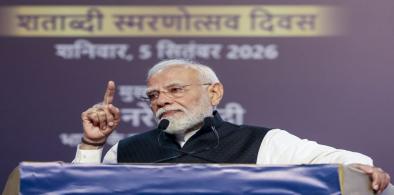
For China to achieve its hegemonic ambitions in Asia, weakening democracies is essential. India, therefore, stands as an iron wall against illiberal encroachments, positioning itself as both a regional hegemon and a defender of democratic order.
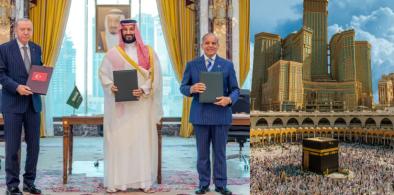
The Mecca Pact, barely a month old, has already been discredited. Its authenticity is in question, its efficacy doubtful. The very notion of an “Islamic Nato” has been exposed as a mirage. Collective defence requires not just declarations but capabilities, coordination and political will. None of these are evident in the pact’s functioning.

The struggle for building a Ram Temple should be seen as a clash between civilizational values, writes Arun Anand for South Asia Monitor

India’s current policy reorientation suggests that for it to overcome its continental and regional challenges vis-à-vis China’s increasing assertion, it must also involve itself in Beijing’s geographic neighborhood, writes Don McLain Gill for South Asia Monitor

Is the Hindu rashtra already here, marking the end of Nehruvian secularism? Just as Turkey’s Recep Tayyip Erdogan is said to be keen on reviving the Islamic Ottoman empire, forsaking Kemal Ataturk’s secularism, is Modi leading India towards the pre-Muslim period of ancient India?, writes Amulya Ganguli for South Asia Monitor

It is clear that Nepal is exposed to multiple forms of infectious diseases. So, it becomes imperative for the Nepal government to be better equipped and expedite viral monitoring to stop possible outbreaks in the future, writes Jivesh Jha for South Asia Monitor
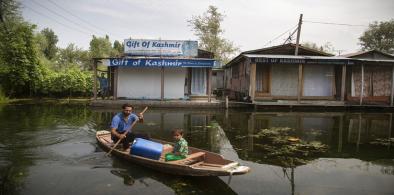
There is little doubt, however, that the removal of the “temporary” provision of a special status for Jammu & Kashmir does have a strong measure of support outside the ruling party because it was perceived as an artificial barrier that fostered separatism, writes Amulya Ganguli for South Asia Monitor
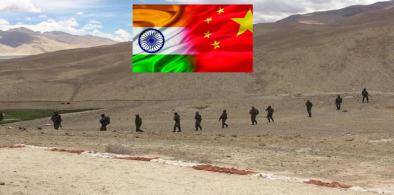
India has hopes on continuing talks but for Beijing, talks are only to gain time - similar to what the terrorists do, writes Lt Gen P. C. Katoch (retd) for South Asia Monitor

There are numerous conjectures against or in support of Ritchie who is fighting her own court battles against the PPP brass. But it is not difficult to conclude that she is being used to tarnish the PPP leaders, dead and living, writes Mahendra Ved for South Asia Monitor
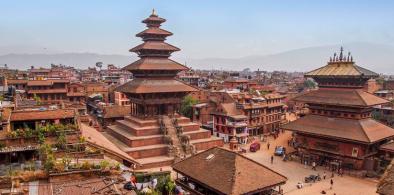
There is a crying need for establishing a Nepal Study Center in New Delhi and an India Study Center in Kathmandu, writes Kamal Dev Bhattarai for South Asia Monitor

As the world battled a never health threat in coronavirus, India’s dependable pharmaceutical sector has risen to the occasion, writes Dr. Gurpreet Sandhu for South Asia Monitor

Our goal is to achieve punitive and credible deterrence capability against Pakistan and China respectively. While it will be a challenge, India has the capabilities and capacities to fight a two-front war and ensuring a stalemate, which will be a strategic victory, with grave consequences to the aggressors, writes Lt Gen P R Kumar (retd) for South Asia Monitor

Continued exploitation of the natural world through hunting, trade, habitat degradation, and urbanisation has shifted mammal populations and led to the rise in infectious animal diseases that can jump over to humans, writes Sarmin Akter for South Asia Monitor

With trust in China – presently one of the largest exporters of aircraft components - weakening. India’s future as a manufacturer of higher-complexity aerospace items is completely in our hands. India must present itself as a viable alternative to China's sourcing, writes Ramesh Ramchandani for South Asia Monitor
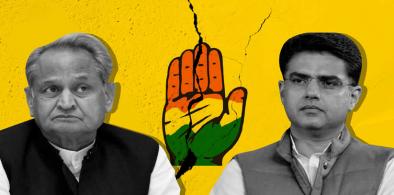
One serious objection to the anti-defection law is the unlimited powers given to every political party to put down dissent or an alternative view, writes Vinod Aggarwal for South Asia Monitor
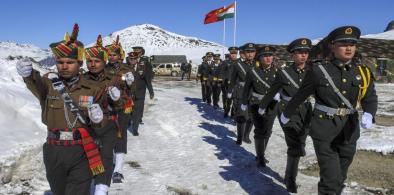
It is going to be a very interesting winter to come, as it is going to be a defining moment in our history having far greater implications than tactical, if we come out of it achieving our national and military objective, writes Lt Gen PR Kumar (retd) for South Asia Monitor
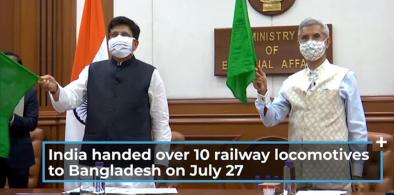
A total of 142 connectivity projects in Afghanistan, Bangladesh, Bhutan, Maldives, Myanmar, Nepal and Sri Lanka have been initiated by India over the last six years, of which 53 have been completed, writes N Chandra Mohan for South Asia Monitor