The southwest monsoon’s impact is felt throughout South Asia. Above-normal rainfall is likely over Pakistan, the Maldives, and Sri Lanka, while it could be less than normal in Bangladesh, writes N Chandra Mohan for South Asia Monitor


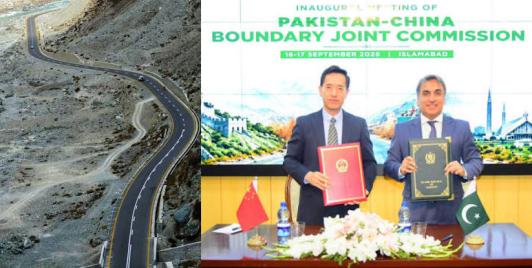
The Pakistan-China Boundary Joint Commission needs to be viewed in backdrop of the fast-changing geopolitics of South Asia and its military implications. The Shaksgam Valley sits immediately north of the Siachen Glacier and just west of Aksai Chin under China's control. By controlling Shaksgam, China can jointly monitor Indian military movements from the north while Pakistan does so from the south.

The question, therefore, is not whether Bangladesh could have secured a particular agreement simply by attending. There is no guarantee that participation in a summit automatically produces investment or diplomatic breakthroughs. The question is whether Bangladesh benefited by being absent.
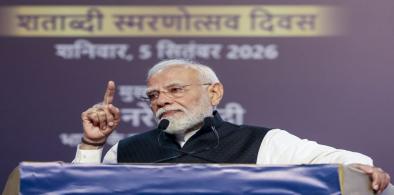
For China to achieve its hegemonic ambitions in Asia, weakening democracies is essential. India, therefore, stands as an iron wall against illiberal encroachments, positioning itself as both a regional hegemon and a defender of democratic order.

The Mecca Pact, barely a month old, has already been discredited. Its authenticity is in question, its efficacy doubtful. The very notion of an “Islamic Nato” has been exposed as a mirage. Collective defence requires not just declarations but capabilities, coordination and political will. None of these are evident in the pact’s functioning.
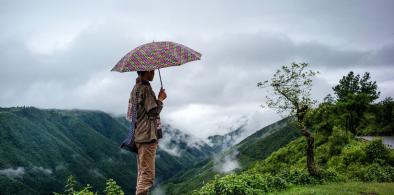
The southwest monsoon’s impact is felt throughout South Asia. Above-normal rainfall is likely over Pakistan, the Maldives, and Sri Lanka, while it could be less than normal in Bangladesh, writes N Chandra Mohan for South Asia Monitor

The Chabahar connectivity project envisages uninterrupted access and movement of goods and services via the sea route and road-rail facilities, making it cost-effective, convenient, and feasible for all parties and boosting the regional economy, writes Vishakh Krishnan Valiathan for South Asia Monitor

From lockdown, we learned that there is a big opportunity for cities to support non-motorised transport to achieve sustainable cities and a non-polluting environment, writes George Cheriyan & Amar Deep Singh for South Asia Monitor
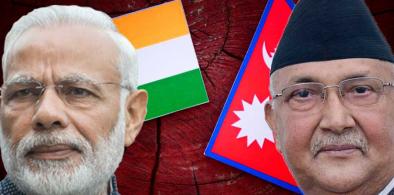
As India prepares for anti-Indianism 2.0 it will eventually have to also address the deeper Nepalese yearning for a sense of equality and mutual respect, writes Amb K V Rajan (retd) for South Asia Monitor

Two major national political parties that took turns in ruling the country for seven decades are about bite the dust, perhaps ending a healthy democratic system in which these two parties ensured a stable government and a strong opposition in parliament most of the times, writes Sugeeswara Senadhira for South Asia Monitor
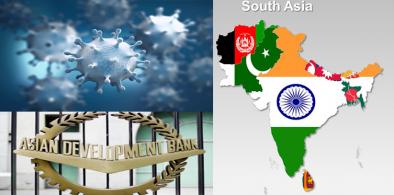
In terms of a more vulnerable population which is less well paid, Afghanistan, India, Bangladesh and Nepal are more vulnerable as compared to the rest of the countries of the region, writes Partha Pratim Mitra for South Asia Monitor
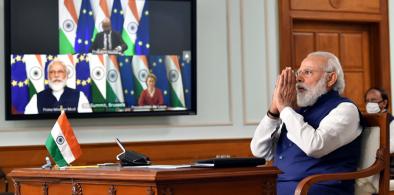
The signing of the India-EURATOM Agreement on research and development cooperation in the peaceful uses of nuclear energy will cover all aspects of research and technological development, writes Amb Bhaswati Mukherjee (retd) for South Asia Monitor
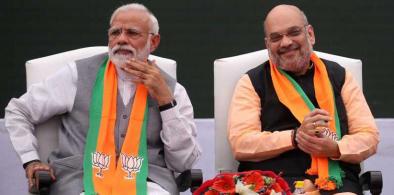
There is little doubt, therefore, that the opportunism of Indian politicians is a reason for the BJP’s success, writes Amulya Ganguli for South Asia Monitor
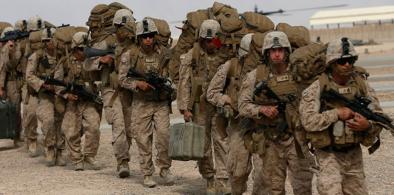
China will use its increased presence and influence in Iran and Afghanistan to target Indian interests, writes Lt Gen P. C. Katoch (retd) for South Asia Monitor
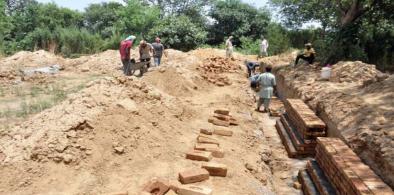
The government’s move on the temple, some media commentators suggest, is to show Pakistan in a better light in comparison with India, which is seen as being driven by Hindutva forces that are against India's religious minorities, writes Mahendra Ved for South Asia Monitor
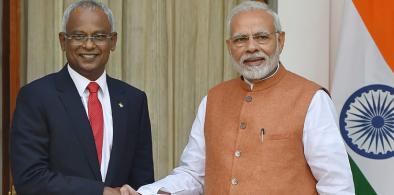
The Maldivian open support against Pakistan in OIC is a victory of Indian diplomacy, writes Jai Kumar Verma for South Asia Monitor
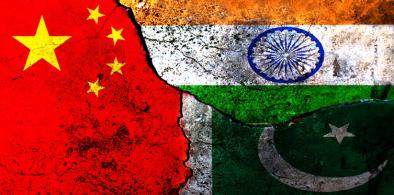
Taking into consideration the zero-sum nature of Pakistan-India relations, Islamabad maybe compelled to acquire arms in a tit-for-tat response to New Delhi, writes Maham S. Gillani for South Asia Monitor
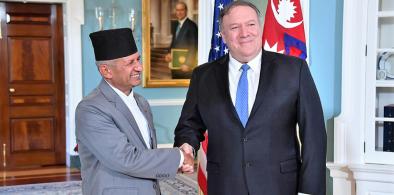
The US aid under MCC is a golden opportunity for Nepal to look beyond India and China and seek greater engagement with other powers and to derive economic benefit and relinquish meaningless geopolitical adventures, writes Vikash Kumar for South Asia Monitor
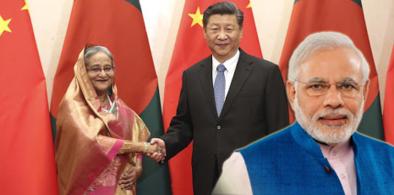
Bangladesh is a very important neighbour for India. The fulcrum of India’s Act East policy and vital for development of India’s North East, it has a major role in the success of BIMSTEC, writes Maj Gen Alok Deb (retd) for South Asia Monitor
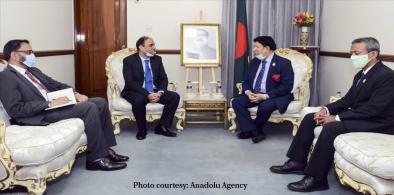
Bangladesh Foreign Minister A K Abdul Momen met Pakistan’s High Commissioner Imran Ahmed Siddiqui in Dhaka on July 1. According to a media report, the meeting indicates a possible thaw in bilateral relations, writes Mahendra Ved for South Asia Monitor