The upshot of an inward-looking regime is a diminishing extent of trade openness - a sharp contrast with the East Asian miracle economies that prospered with export-orientation, writes N Chandra Mohan for South Asia Monitor


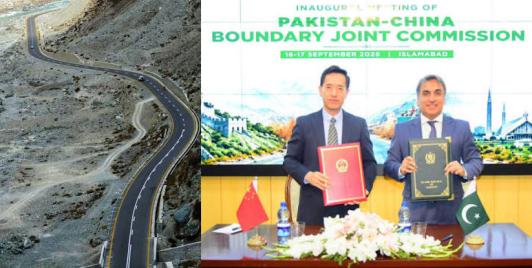
The Pakistan-China Boundary Joint Commission needs to be viewed in backdrop of the fast-changing geopolitics of South Asia and its military implications. The Shaksgam Valley sits immediately north of the Siachen Glacier and just west of Aksai Chin under China's control. By controlling Shaksgam, China can jointly monitor Indian military movements from the north while Pakistan does so from the south.
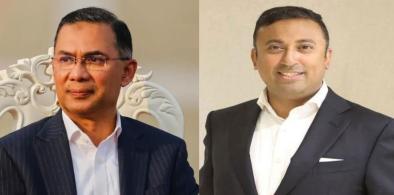
The question, therefore, is not whether Bangladesh could have secured a particular agreement simply by attending. There is no guarantee that participation in a summit automatically produces investment or diplomatic breakthroughs. The question is whether Bangladesh benefited by being absent.
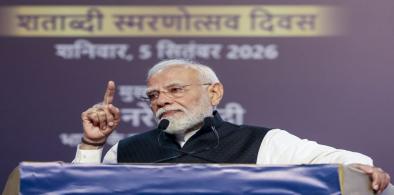
For China to achieve its hegemonic ambitions in Asia, weakening democracies is essential. India, therefore, stands as an iron wall against illiberal encroachments, positioning itself as both a regional hegemon and a defender of democratic order.
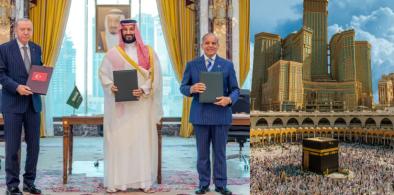
The Mecca Pact, barely a month old, has already been discredited. Its authenticity is in question, its efficacy doubtful. The very notion of an “Islamic Nato” has been exposed as a mirage. Collective defence requires not just declarations but capabilities, coordination and political will. None of these are evident in the pact’s functioning.
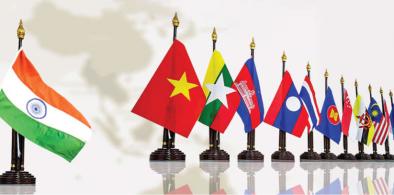
The upshot of an inward-looking regime is a diminishing extent of trade openness - a sharp contrast with the East Asian miracle economies that prospered with export-orientation, writes N Chandra Mohan for South Asia Monitor
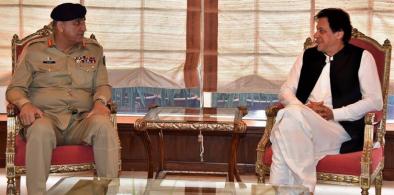
The most significant thing at the several ‘jalsas’ (protest rallies) that opposition have been organising across the country in Pakistan is to challenge the army’s role and, for the first time, the top brass is being named, writes Mahendra Ved for South Asia Monitor
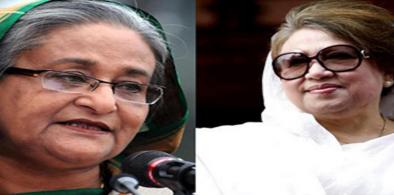
According to the EIU, for a decade Bangladesh has been in the middle of an autocratic and flawed democratic system, known as the hybrid regime, writes Mahmudul Hasan for South Asia Monitor
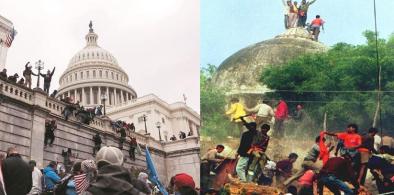
It is clear, therefore, that the politics of polarization which divides the citizens of a country - whether in the US, India or countries in Europe - between nationalists and anti-nationals is here to stay, writes Amulya Ganguli for South Asia Monitor

Drawing on his experience of working with New Delhi, Burns wrote in what could be his roadmap for relations between New Delhi and Washington, emphasising continuity saying that it was bigger than the ties between President Donald Trump and Prime Minister Modi, writes Arul Louis for South Asia Monitor
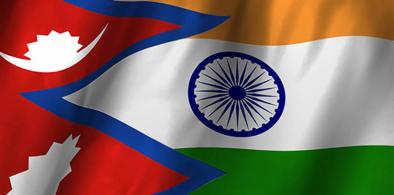
Nepal’s story is not much different than that of India’s. Nepal’s prime ministers - Girija Prasad Koirala (1994), Manmohan Adhikari (1995), and K P Sharma Oli (2020-) have taken steps to dissolve the house despite their parties’ being in majority, write Jivesh Jha & Alok Kumar Yadav for South Asia Monitor

If white supremacism is the basis of right-wing politics in America and Europe, Hindu supremacism is in India. Both have their roots in the concept of the "Master Race" and the "Chosen Land", writes Amulya Ganguli for South Asia Monitor
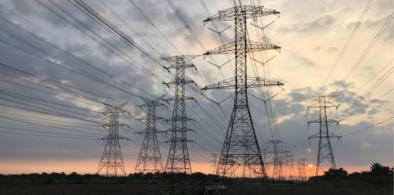
South Asia’s diverse topography lends itself to greater cross-border power trade, but political inhibitions have ensured that actual progress has been less than the potential, writes N Chandra Mohan for South Asia Monitor

Polarization over the prevailing socio-political orientation since Prime Minister Narendra Modi assumed office has been marked and a bitter sectarian fissure has emerged in India, writes Cmde C Uday Bhaskar (retd) for South Asia Monitor
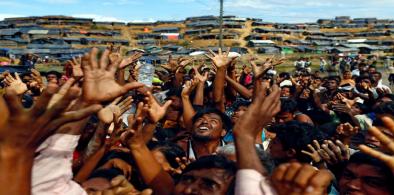
India is now a non-permanent member of the Security Council from January 2021. Following this, India has expressed interest in holding talks with Bangladesh and Myanmar on safe, dignified, and sustainable repatriation of Rohingya, writes Mohammad Rubel for South Asia Monitor
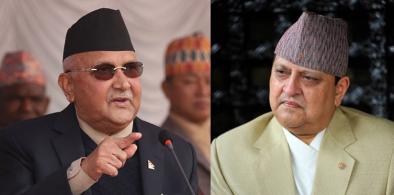
Nepal scarcely has political ground prepared for the king to return to the throne. The monarch also blatantly failed to deliver and fulfill their promises even when it had absolute power in the country's economic development, writes Bishesh Joshi and Laavesh Thapa for South Asia Monitor

Presently, there are almost two million seafarers worldwide with a significant number from the South Asian sub-continent. Indians in fact constitute the third-largest number of seafaring officers in the world, writes Cmdre Anil Jai Singh (retd) for South Asia Monitor
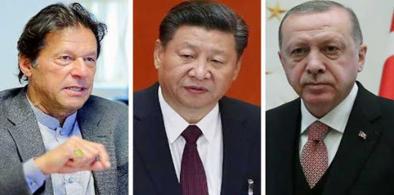
While the US and Israel is focused on Iran going nuclear, Pakistan is quietly transferring nuclear technology to Turkey. Beijing will be too happy to conduct Turkey’s first nuclear test on Chinese soil as it did for Pakistan, writes Lt Gen Prakash Katoch (retd) for South Asia Monitor

A look at the South Asia Subregional Economic Cooperation (SASEC) countries - Bangladesh, Bhutan, India, Maldives, Myanmar, Nepal, and Sri Lanka - shows the importance of effective and modern trade facilitation measures, writes Partha Pratim Mitra for South Asia Monitor
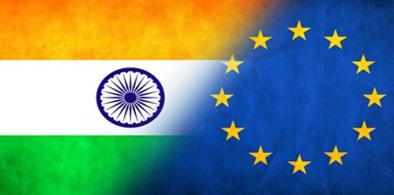
India and EU today need innovative new ideas to enhance their trade and economic cooperation, this being the key component for stronger partnership promoting economic growth in these troubled times, writes Sunil Prasad for South Asia Monitor